United States

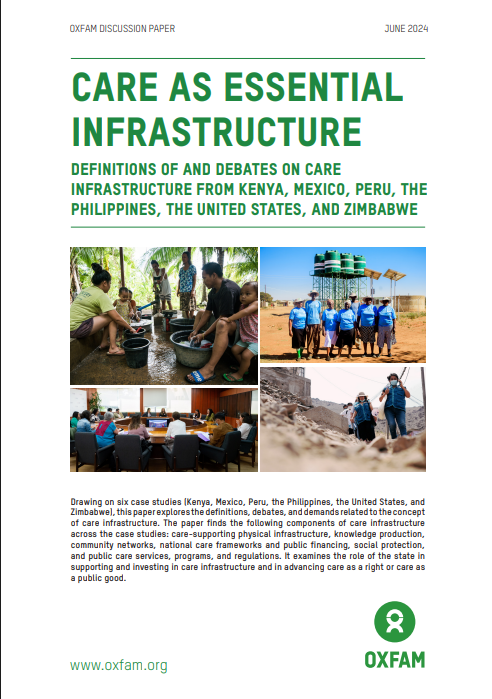
Care as Essential Infrastructure: Definitions of and debates on care infrastructure from Kenya, Mexico, Peru, the Philippines, the United States, and Zimbabwe

Drawing on six case studies (Kenya, Mexico, Peru, the Philippines, the United States, and Zimbabwe), this paper explores the definitions, debates, and demands related to the concept of care infrastructure. The paper finds the following components of care infrastructure across the case studies: care-supporting physical infrastructure, knowledge production, community networks, national care frameworks and public […]
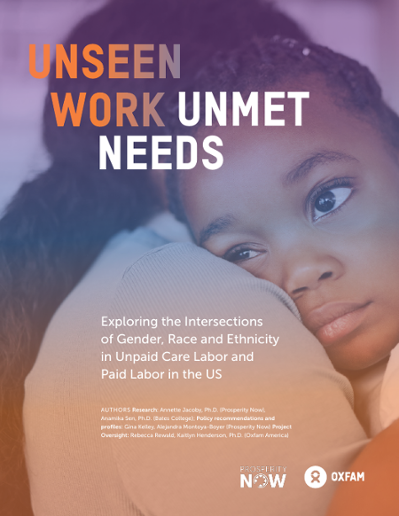
Unseen Work, Unmet Needs: Exploring the intersections of gender, race and ethnicity in unpaid care labor and paid labor in the U.S.

Oxfam America and Prosperity Now have embarked on a comprehensive joint research project to explore the dynamics of women’s paid and unpaid labor in the US, particularly for women of color, who are disproportionately affected by the dual impact of paid work and unpaid care responsibilities. This report adopts an intersectional lens to delve into […]

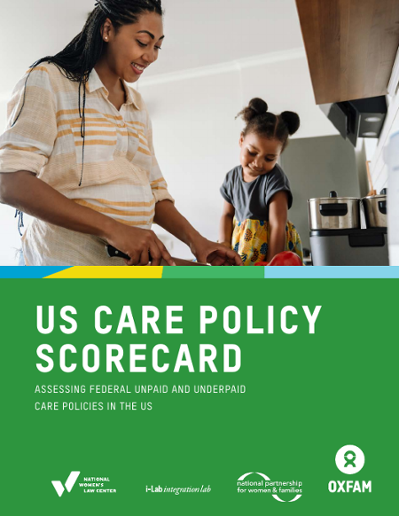
US Care Policy Scorecard: Assessing federal unpaid and underpaid care policies in the US

The US Care Policy Scorecard seeks to assess the US care policy environment at the federal level by adapting and implementing the Care Policy Scorecard Framework and Tool in the US context. The US Scorecard looks at 30 federal policy indicators related to both unpaid care and underpaid care work (UUCW). Each policy indicator is measured by […]

Oxfam America Unpaid & Underpaid Care Work Strategy: 2021-2024

The 2021-2024 Oxfam America (OUS) Unpaid and Underpaid Care Work Strategy is intendedto guide our work over the next three years to contribute to decreasing gender inequalitythrough a revaluing of unpaid and underpaid care work (UUCW) in the US andinternationally, which will help to foster fair and caring economies (See “Vision Statement”below).1For this strategy, unpaid […]

Topic

Areas Covered

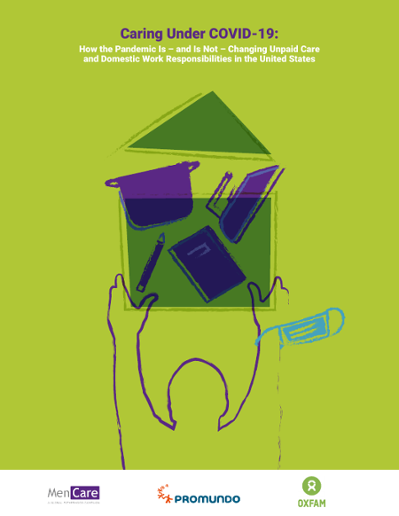
Caring Under COVID-19: How the Pandemic Is -and Is Not- Changing Unpaid Care and Domestic Work Responsibilities in the United States

The study reveals findings from a rapid poll exploring the gendered and racial impacts of COVID-19 on unpaid care work, which was part of MenCare: A Global Fatherhood Campaign. The report demonstrates how COVID-19 has brought an unprecedented crisis of care in the United States, with a particular workload being taken on by women as a group, and Black, Latinx, and Asian individuals.

Topic

Areas Covered

All Work and No PayThe Gender Injustice of Unpaid Care in America

Women around the world spend more time than men doing unpaid care and domestic work:taking care of children, elders, and the ill. In the United States, women spend 37 percentmore time on unpaid care than men. This unequal distribution of unpaid work—work that isessential to families and society—limits women’s career choices, income, and personaldevelopment. It […]

Topic

Areas Covered

Quicklinks

WE-Care

Gender Equality